
Hamilton County Court Record Requests
The court decides the channel. Misdemeanor, probate, guardianship, and county civil files sit with the Hamilton County Clerk. Those are Hamilton County Court cases. The Hamilton County District Clerk holds the 220th Judicial District Court felony, district civil, and family cases. Justice Court and municipal records stay with those lower courts.
Try the county-linked Tyler portal or re:SearchTX first when the case is integrated. If the document is not there, use a written Records Search Request. The District Clerk accepts it by email, mail, or in person. The form lists districtclerk@hamiltoncountytx.gov and 102 N Rice Street, Suite 215, Hamilton, TX 76531. Call (254) 386-1240 for the page count and fees. A later county directory lists (254) 386-1241.
- Identify the court and copy the full cause number.
- Check the official local portal, posted docket, or re:SearchTX case shell.
- List the exact filing, date range, and copy type needed.
- Email, mail, or deliver the written request to the proper clerk.
- Confirm page count, prepay fees, and select delivery.
Two Hamilton County Clerk Counters
Both clerks work out of the courthouse at 102 N Rice Street. Each serves different courts. The County Clerk sits in Suite 107 and lists (254) 386-1203 for the public and (254) 386-1204 for staff. The District Clerk is in Suite 215. Match the suite to your case type. That way your request does not land with an office that never held the file.
Hamilton County Clerk
County Court misdemeanor, probate, guardianship, and county civil records
Suite 107, 102 N Rice Street, Hamilton, TX 76531
(254) 386-1203
Hamilton County District Clerk
220th District Court felony, civil, and family records
Suite 215, 102 N Rice Street, Hamilton, TX 76531
(254) 386-1240
districtclerk@hamiltoncountytx.gov
The County Clerk posts weekday hours of 8:00 a.m. to 4:30 p.m., with payments accepted before 4:00 p.m. The office publishes no public-terminal policy or walk-in turnaround promise. Call ahead when timing matters.
Kinds of Court Records
Think of a docket as the index and schedule. The case file behind it runs far deeper. A criminal file may hold a complaint, information or indictment, bond papers, motions, plea papers, judgment, sentencing order, and appeal filings. Civil files often contain the original petition, citation and return, answer, motions, exhibits, scheduling orders, final orders, judgment, and notice of appeal.
Family, probate, and guardianship files add applications, inventories, reports, and temporary orders. Public access may be limited there. A dated docket PDF can prove a motion or status hearing happened. It says nothing about the motion itself or the order that followed. Name the specific document you need rather than asking for everything.
Hamilton County Written Request Route
For a district case document missing online, the District Clerk's current form is the clearest path. It requires written requests, advance payment of fees, and a call or email for the page count. Plan on two business days for results. That stated window is no promise for large, old, or restricted files.
Mail requests need a self-addressed stamped envelope, a check or money order, and any extra postage. Card payment works differently. The instructions call for an e-filed copies request. Payment comes after the clerk supplies the count. In-person and email delivery also appear in the instructions. The county publishes no microfilm inventory, exemplified-copy fee, or online certified-copy checkout. Ask the clerk to quote those.
Precise requests move faster: Include the court, cause number, party role, filing name, filed date if known, and plain or certified copy choice.
Court Records: What They Contain
Records vary by court. A complete case record still ties the docket to the filed papers through common fields. The cause number should match your request and every returned document. Case style names the parties and their roles. File marks tell you when papers reached the clerk. Signed orders show what the court actually did. A hearing list alone may not show the final result.
| Cause number | The court-assigned identifier that ties the file together. |
|---|---|
| Case style | The formal caption and party roles. |
| Filed papers | Petitions, charging papers, answers, motions, notices, and returns. |
| Orders and judgment | Signed rulings, final decisions, or sentencing material as applicable. |
| Docket and settings | Events, hearing dates, actions, and status information. |
| Certification | A clerk authentication attached to an official copy. |
Online Hamilton County Document Access
re:SearchTX can display a case shell, filings, hearings, and any available documents. Viewing a document image may depend on account role and payment. The official fee order sets ten cents per page. It adds a one-dollar minimum per document. A purchased document stays available for up to thirty days. Those terms govern that statewide system. They do not cover every clerk copy product.
The Texas role-based electronic access source explains why a public case shell and a viewable image are not always the same thing.
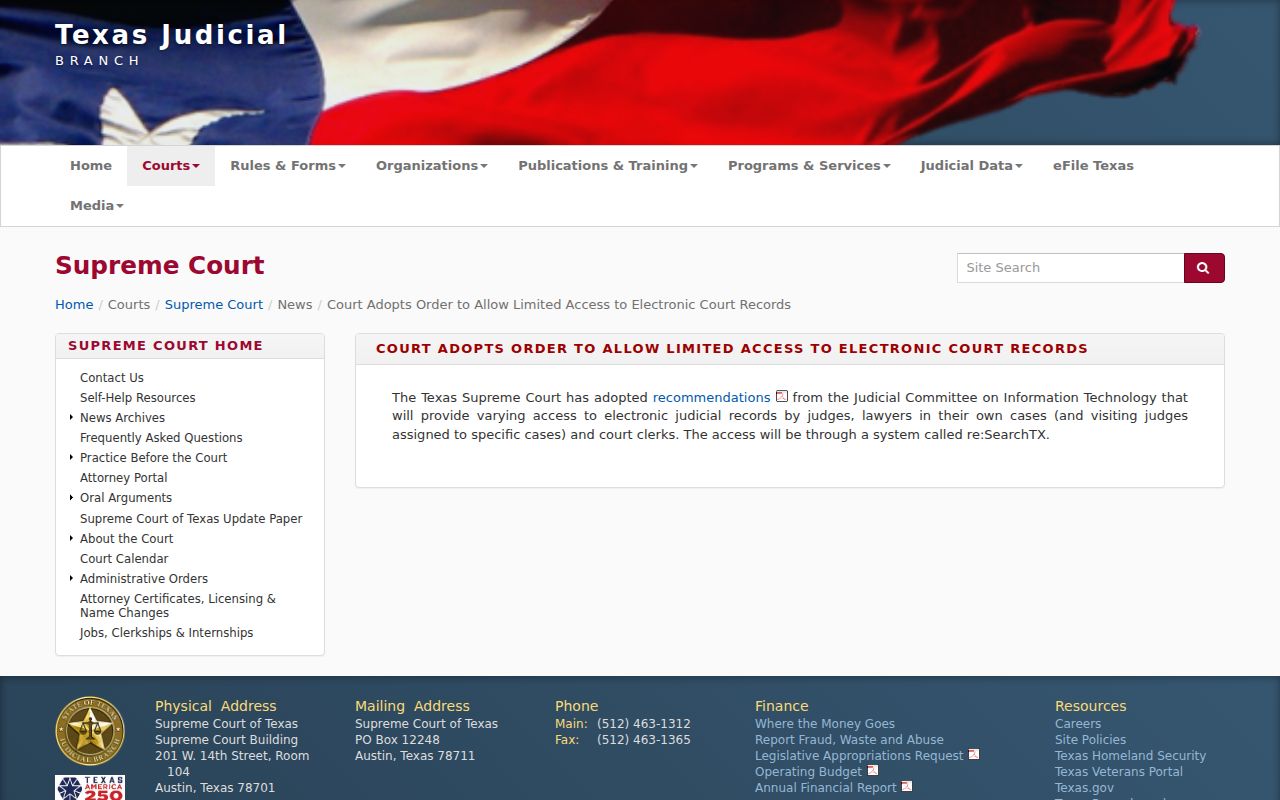
No filing link in the portal? Ask the custodian whether the cause is restricted, not yet synchronized, fee gated, or held only in a non-digitized file.
Copy Fees and Certification
Hamilton County sources list concrete clerk fees. Both clerks charge one dollar per page for an ordinary copy. Certification costs five dollars. A five-dollar search fee applies when no cause number or exact record key is supplied. Mailed District Clerk copies add postage. Confirm the amounts when you place the request. File size and product drive the total.
| Record service | Published amount | Hamilton County note |
|---|---|---|
| Plain copy | $1 per page or part | County and District Clerk materials |
| Certification | $5 | Added when a clerk-authenticated copy is requested |
| Name or document search | $5 | Applies when no cause number or exact key is supplied |
| Mailed delivery | Postage added | District Clerk asks for a stamped return envelope |
| re:SearchTX document | $0.10 per page, $1 minimum | State portal purchase, available up to 30 days |
A portal printout or posted docket PDF is not certified. Certification means the custodian authenticates the copy itself. Ask whether a plain copy will do before paying for the official product.
Hamilton County Issuance Requests
A copy is one thing and issuance is another. The District Clerk’s Issuance Request Form handles the second task. It covers citations, precepts, and temporary restraining orders. Protective orders, abstracts of judgment, writs of execution, and other listed process appear there too. You supply the document title and its file-marked date. Add the party to be served, who is requesting, and how service should happen.
Service can run through the Hamilton County Sheriff’s Office. An authorized civil process server, posting, publication, certified mail, email, or another method the form names also works. Each party needs its own form. One helpful note sits on the form itself. No copy fee applies when the clerk emails the issuance. That break covers issuance only, not ordinary case-record copies.
Access Rules for Court Records
Case files at the Hamilton County courthouse sit outside the usual county Public Information Act track. The reason is simple. The judiciary keeps its own records. Texas Rule of Judicial Administration 12 sets the special process that governs them. Government Code Section 552.0035 draws that boundary in state law. So when you want a court docket or case file, the clerk handles it through a Records Search Request. The general PIA form does not apply.
Some information in a docket stays off limits. Texas Rules of Civil Procedure 76a and 21c cover sealed court records and the redaction of sensitive data. Family Code Section 58.007 restricts access to juvenile records. A public docket may therefore omit sealed content or black out protected facts. Some entries show only limited metadata.
Public does not mean unredacted: Missing documents may reflect a valid restriction, role limit, synchronization delay, or older paper file.
For the current statewide and local materials, the Texas rules and forms directory is the official source, and it shows each rule and form in its present form.
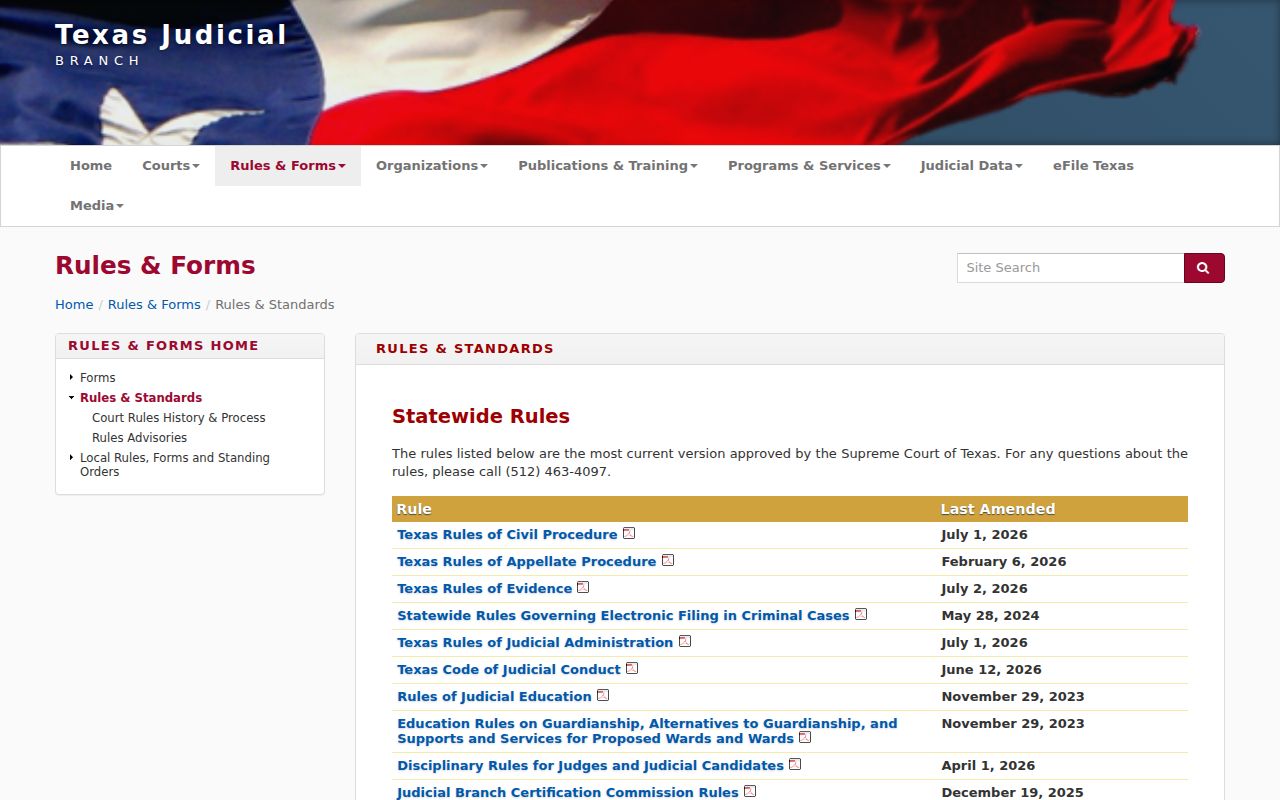
Check the maintained source before relying on an old form or copied rule text.
Hamilton County Record Jurisdiction Check
Before you send a record request to Hamilton County, make sure it is headed to the right office. County Court and 220th District Court share a courthouse building. Their case files live apart. Each clerk keeps its own docket. Justice court and municipal court matters stay put too, with the court that actually heard the case.
The official Hamilton County landing page shows the courthouse setting. It links out to each county department, so you can confirm which office holds the court records you need.
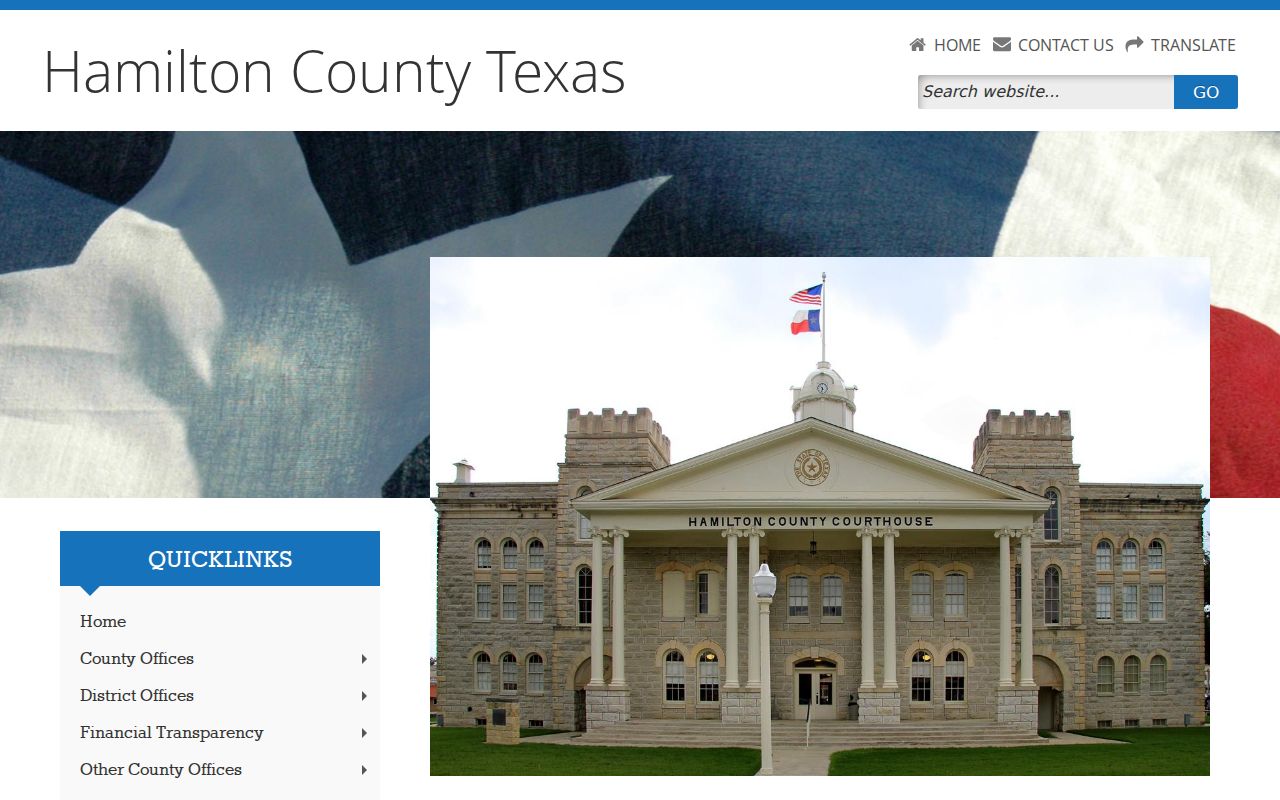
Use that county source to find the current office page. Then check the cause number and case type before you send the record request.
Hamilton County Appellate Records
An appeal builds a record of its own. The Hamilton County trial file might carry a notice of appeal, a certification, or an appellate cause number, but the reviewing court keeps a docket that stands apart. So a docket search in the County Clerk or District Clerk portal alone will miss what happens next. Appeals from Hamilton County go to the Tenth Court of Appeals in Waco. Track the case there once it lands on that court's docket. The official Tenth Court of Appeals source lays out the appellate court's docket and how to reach its case records.
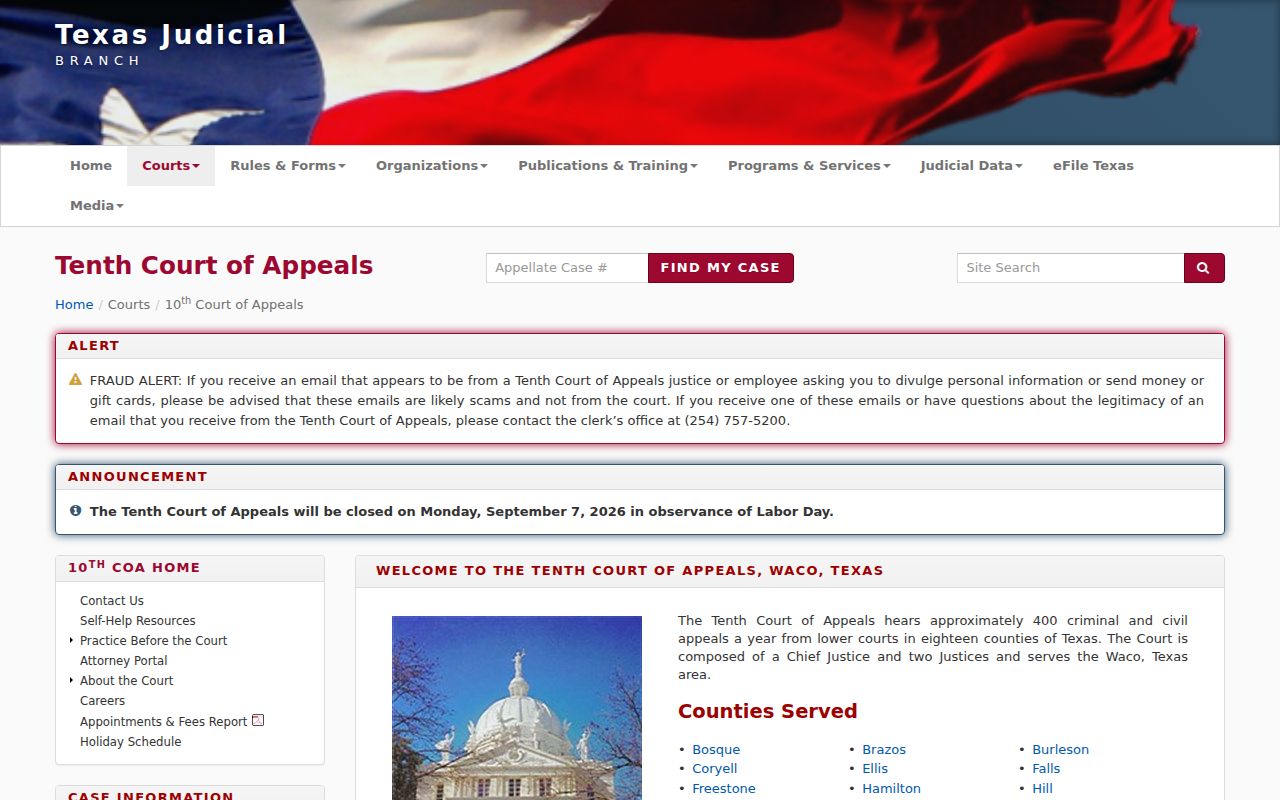
Hang on to both cause numbers when you have them. The lower-court clerk still holds the trial file, while the appellate clerk keeps every filing made in the appeal itself.
Federal Records Outside Hamilton County
Federal cases tied to Hamilton County never sit in the county Tyler portal or the 220th District Court file. They belong to a whole different system. Hamilton County falls inside the Western District of Texas, Waco Division. The federal clerk works from 800 Franklin Avenue, Room 380, Waco, TX 76701. The public line there is (254) 750-1501. Bankruptcy runs through the Waco bankruptcy division with its own clerk operation. The Western District office-location source points you to the federal clerk's counter in Waco.
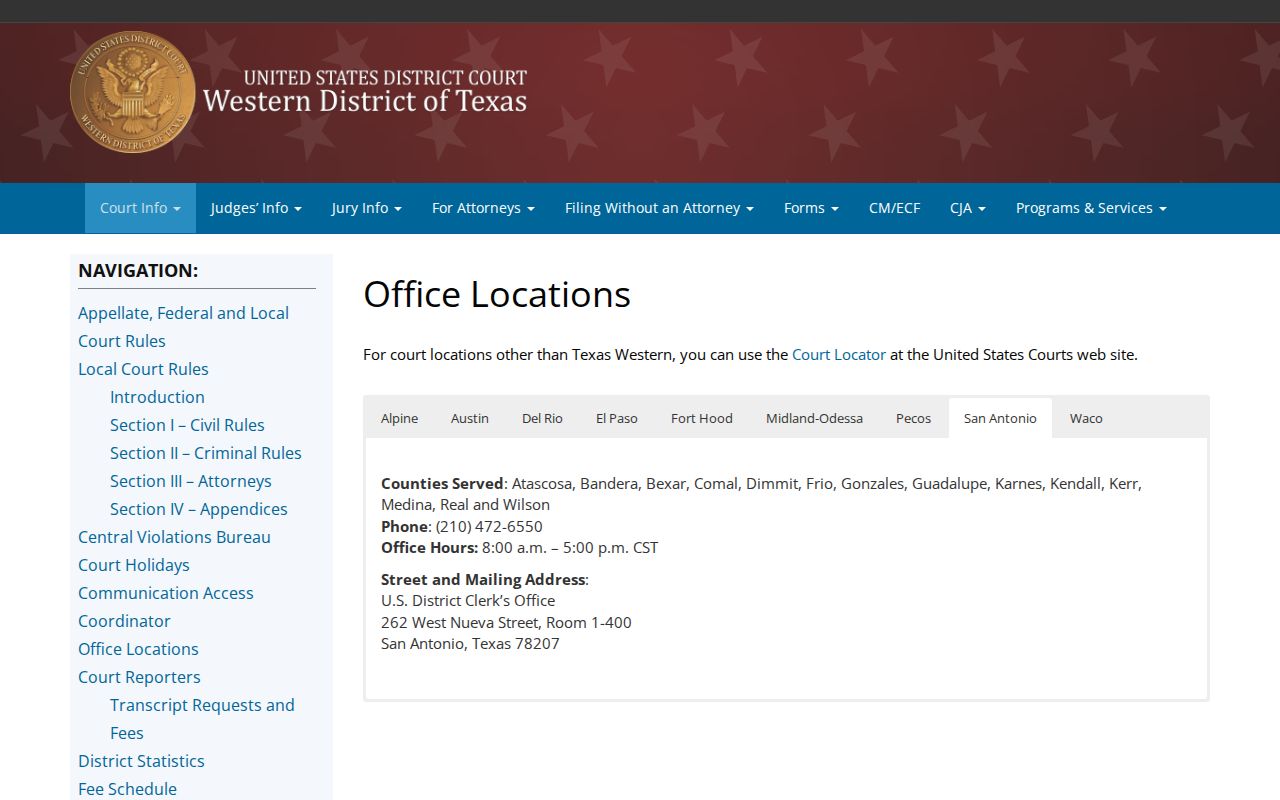
That counter sits in Waco, not at the Hamilton County courthouse. Check the court and division first. For electronic federal dockets and document images, register with PACER.
PACER fees and account terms shift over time, so check them in the official system. A federal result also sits outside what the Hamilton County clerk keeps as its case record.
Older Hamilton County Record Gaps
The county posts no full date for when older files became searchable online. No public microfilm list exists. So a blank results screen can mean several things. The case may simply sit outside the current electronic range. It could also point to the wrong clerk. Or it could be a brand-new filing, a restricted file, or an old cause-number format.
Start with the cause number you know. Run it through the Hamilton County docket search. Then ask the clerk for a narrow date range and record type. The clerk can tell you whether a paper or archived file exists. You can also learn what can be copied, how long a search takes, and the fee. One caution: an online absence is not proof that a document was never filed.